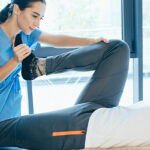



The Connection Between Hip and Knee Pain
Did you know that for a lot of people, their knee pain is not actually due to a problem with the knee, but one with the hip? At Ellis Physical Therapy, we frequently observe that a problem originating in the hip can be first felt as knee pain and vice versa.
You might wonder how this is possible. The answer lies in what’s known as the kinetic chain, where the hip and knee joints work together. The interconnection means that an imbalance or dysfunction in one joint can lead to compensation and pain in the other. The good news is our therapists can help you figure out the source of your pain and, more importantly, guide you back to health.
To move towards a healthier, pain-free life, we recommend you consult with one of our physical therapists as soon as possible!


Our Patients Get Great Results
“Dr. Ellis is incredible! Within the first 10 minutes of us meeting he figured out why I was having problems. I’ve been doing PT with him for a couple months now and have seen amazing results. The staff is incredibly friendly and helpful. I highly recommend going there if you want to receive the best PT treatment!”
– B.T.

3 Ways to Practice Gratitude
Did you know that being grateful is actually good for your health? It’s true!
We all love Thanksgiving for the excellent food, football, and time spent with family, but truthfully, this holiday means much more. Practicing gratitude can lead to greater happiness all year long. According to Harvard Health Publishing, “Gratitude helps people feel more positive emotions, relish good experiences, improve their health, deal with adversity, and build strong relationships.” If you want to implement more gratitude in your own life, take a look at these 3 tips.
1. Write thank you letters
Remember writing thank you letters? How long has it been since you wrote one? You don’t need to have a wedding, graduation, or other big life event to thank the people in your life. Try writing thank you letters to your friends and family for the little things– you’ll be surprised at how good it feels!
2. Write down what you are grateful for every day
This might sound intimidating, but it doesn’t have to be! Take a few minutes each morning or evening to write down at least 3 things that you are grateful for in your life. This repeated action helps us shift into a more positive mindset and can help fight symptoms of depression and anxiety.
3. Use visual reminders
It can be hard to remember to practice gratitude. With your hectic schedule, sometimes it can feel impossible to sit down, take a moment to breathe, and reflect on your blessings. Visual cues can be a great tool for reminding us to take a beat. Something as simple as sticky notes, a poster, or even your home screen on your phone or laptop can help us remember to slow down and shift to a positive mindset.
Your Guide to Recognizing the Signs and Symptoms of Hip and Knee Pain
At Ellis Physical Therapy, we believe in a holistic approach to healing. As musculoskeletal experts, we are trained to pinpoint the root cause of your condition, differentiate between hip and knee pain, and develop a plan that addresses the whole person, not just the symptom.
The Telltale Signs of Hip Pain
- Localized Discomfort and Stiffness: Hip pain generally starts as a localized discomfort in the groin area, often accompanied by stiffness restricting the range of motion. As the severity worsens, this pain can sometimes extend to the thigh and even the knee.
- Morning Stiffness: One of the most commonly reported symptoms is morning stiffness, which typically eases as the day progresses.
- Difficulty in Performing Daily Activities: Individuals with hip pain often find it challenging to bend over to tie shoes or pick up objects from the floor. This pain can intensify during movements like getting up from a seated position or walking uphill.
Classic Indicators of Knee Pain
- Localized Pain and Swelling: A primary indicator of knee issues is localized pain, often accompanied by swelling. This can be especially noticeable after prolonged periods of activity.
- Stiffness and Reduced Range of Motion: Another hallmark of knee pain is stiffness, which often restricts the knee’s range of motion.
- Popping or Crunching Noises: Experiencing popping or crunching noises during knee movement is a sign that shouldn’t be ignored, as these sounds often signify underlying knee issues.
- Difficulty in Bearing Weight: A large number of individuals with knee pain report difficulty bearing weight on the affected knee. This is often described as a feeling of weakness or instability, making activities such as climbing stairs or even simple walking difficult.
While interconnected, the hip and knee are distinct structures with unique roles in our body’s movement and different responsibilities. Understanding these differences is vital in diagnosing and treating pain effectively. This is where the expertise of our physical therapists can help!
Navigating the Path to Recovery with Ellis Physical Therapy
At Ellis Physical Therapy, our physical therapists will conduct a comprehensive evaluation, and distinguish whether you’re dealing with an issue in your hip, knee, or both. After completing the evaluation, we’ll design a program focusing on the actionable steps you can take to ensure long-term relief and prevention of future injuries, including the following:
- Tailored Therapeutic Exercises: Our therapists will provide you with stretching and strengthening exercises to help restore your mobility and function. For example, eccentric training focuses on elongating a muscle under tension, proving particularly effective in strengthening muscles and improving mobility.
- Neuromuscular Re-education: This involves using exercises and manual techniques to restore normal muscle function and movement patterns. These techniques are especially effective in reducing pain and enhancing function, especially in individuals with hip and knee pain.
Our therapists go beyond the surface, digging deep into your symptoms to identify the underlying issues and determine the true origin of your pain, whether the hip, the knee, or both. Our goal is to build a program that helps you get back to living your best life!

Follow These Simple Steps to a Pain-Free Life
Are you ready to embrace a lifestyle that promises better mobility and less pain? At Ellis Physical Therapy, we are here to guide you every step of the way, fostering a future where you feel better, move better, and live better!
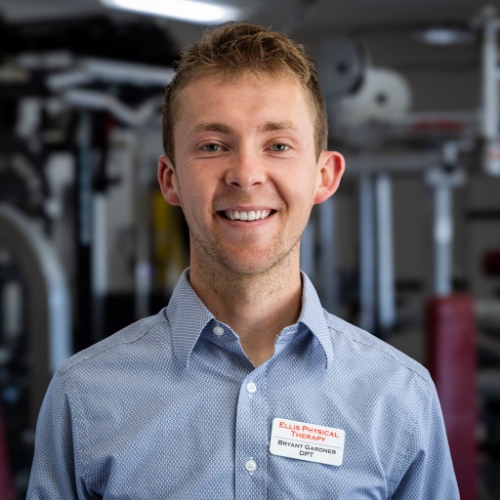
Meet Bryant Gardner
Bryant Gardner, PT, DPT, was born and raised in Rigby, ID. After high school, he served a mission for the Church of Jesus Christ of Latter-Day Saints in Maryland, Virginia, and West Virginia and came home with a strong mumble and a love for people and seafood. He completed an undergraduate degree at BYU-Idaho and his Doctor of Physical Therapy (DPT) degree at Idaho State University. He fell in love with the field after observing the depth of clinical relationships between physical therapists and patients, and this is still the aspect of the profession that he finds most rewarding. Bryant has clinical interests in helping patients manage complex conditions affecting the entire body, such as diabetes and cancer, and the impact these conditions have on everyday life. He also enjoys treating patients with shoulder and knee pain, issues with balance, and various forms of neuropathy. Bryant’s main focus in life is spending quality time with his wife, Megan and their two children, Nellie and Call. Family activities often include hiking, camping, running, and making a variety of international and comfort dishes at home. He is an aspiring Dutch oven cook and has a minor addiction to creating nut butter combinations at home, which are usually met with skeptical looks (for the former) or eagerly devoured (for the latter) by his kids.
Did You Know Ultrasound Could Be Used for Pain Relief?
Ultrasound can help you heal, no matter what aches or pains you may be experiencing. Ultrasound is a specialized method of physical therapy that uses mechanical energy to promote the healing process. It can be used as a way to manage or relieve pain, treat injuries, and improve your ability to perform daily activities. If you are suffering from pain or a recent injury, ultrasound treatments may benefit you.

Holiday Jam (A Great Homemade Gift!)
Ingredients:
- 1 package (40 ounces) frozen unsweetened strawberries, thawed or 2-1/2 quarts fresh strawberries, hulled
- 1 pound fresh or frozen cranberries, thawed
- 5 pounds sugar
- 2 pouches (3 ounces each) liquid fruit pectin
Directions:
- Grind strawberries and cranberries in a food processor or grinder; place in a Dutch oven. Add sugar.
- Bring to a full rolling boil; boil for 1 minute. Remove from the heat; stir in pectin and return to a full rolling boil. Boil for 1 minute, stirring constantly. Remove from the heat.
- Cool for 5 minutes; skim off foam. Carefully ladle hot mixture into hot half-pint jars, leaving 1/4-in. headspace. Remove air bubbles; wipe rims and adjust lids. Process for 10 minutes in a boiling-water canner.
Sources:
- https://pubmed.ncbi.nlm.nih.gov/32643252/
- https://pubmed.ncbi.nlm.nih.gov/31621559/
- https://pubmed.ncbi.nlm.nih.gov/30407271/
- https://journals.lww.com/jgpt/fulltext/2020/04000/hip_muscle_strengthening_for_knee_osteoarthritis_.6.aspx
- https://www.jospt.org/doi/10.2519/jospt.2018.7877
- https://www.tasteofhome.com/recipes/christmas-jam/