



How Physical Therapy Can Help Sports Injuries This Spring
At Ellis Physical Therapy, we are experienced in dealing with all spring sports season injuries and can give you the programs to prepare you for the season and prevent new injuries! Are you looking forward to getting out on the courts? Do you look forward to golf or the start of baseball/softball season?
The winter seasons can be sedentary and lead to more aches, pains, and discomfort than one may think. Fortunately, the warm weather is a great time to get outdoors and play sports.
If you find yourself in pain from a throwing injury or a bad swing of the club or racquet this spring, or you’d like to discuss ways you can get in shape to prevent any injury, don’t hesitate to contact Ellis Physical Therapy.
Whether you are a young athlete or have played sports for decades, our physical therapists know how to treat your injuries and get you back in the game.

We’ve Opened a New Location!
We’re excited to share that Ellis Physical Therapy has expanded with a brand new location: Peak Performance in Ammon, ID! While the clinic may look familiar to some, it’s now under Ellis ownership—meaning you’ll get the same high-quality care, personalized treatment, and trusted approach you’ve come to expect from our team. If you or someone you know is in the Ammon area, we’d love to help you move and feel your best!

Our Patients Get Great Results
“Dr. Jason Bailey worked on me and knew exactly how to relieve my pain. I’ve had chronic muscle pain right around my shoulder blade for years and have never had great luck in relieving it. I’ve tried several solutions but only ever seen temporary results. Massaging feels good in the moment but the pain returns. When I saw Dr. Bailey, be took a look at my shoulder and knew exactly where the pain was. He could pinpoint it on the first try. I constantly ask my wife to massage it and she can never even find the painful spots consistently. I can’t believe Dr. Bailey was able to know right away what was causing the pain. He recommended dry needling. I was hesitant at first because it was new to me and I was in disbelief that it would do anything. He took the time to explain to me the benefits of dry needling, and how it will restart those muscle groups that are locked up and not receiving adequate blood flow. I conceded and he stuck me with a few needles. They weren’t painful in the least. Like not even a prick. I’ve hurt worse getting a haircut! He knew exactly where to stick the needles, and he’d even tell me as he’s doing it that I’ll feel this one more or that one less, etc. I don’t even know how he knew, but he was spot on. I’m a big fan of his and of the dry needling process. I highly recommend you pay him a visit and get yourself the pain relief your body needs!”
– J.M.
Common Causes of Sports-Related Injuries
Injuries are a part of sports, but you can resolve them quickly and get back to doing what you love with a proactive approach to rehabilitation. Most athletes learn that taking care of issues when they are small leads to a faster recovery.
Many people think sprains and strains are the same, but they describe damage to different tissues. Tendons are tissues that connect muscles to bones, and ligaments are tissues that connect bones to the bone.
- Sprains occur when a ligament is stretched beyond its limits or torn.
- Strains occur when a tendon is stretched beyond its limits or torn.
Sprains are typically the result of a trauma, a deceleration (slowing down) movement, or a sudden change in direction. The most common symptoms include pain, inflammation, muscle spasm, and sometimes an inability to move the joints where the injury occurred.
Ankle sprains are often the result of a faulty step while running or stepping on uneven terrain. The injury occurs when the ankle rolls, twists, or turns awkwardly to the outer aspect of the ankle (i.e., lateral ankle sprain). This sudden stretch leads to partial or complete tearing of the ligaments supporting the ankle joint. The severity of the injury will determine the degree of pain, inflammation, and ability to move the joints where the injury occurred.
Approximately 85% of ankle sprains are inversion sprains (i.e., rolling outward). This injury damages the outside (lateral) ligaments and may lead to restrictions on how the joint moves. The joint restrictions will, in turn, affect the athlete’s ability to tolerate running and jumping and may also lead to chronic ankle instability and new injuries that impact an athlete’s ability.
It is important to note that it is in your best interest to have a physical therapist make sure a sprain is fully healed before returning to your normal level of physical activity. Regardless of the type and nature of your sports injuries, our team can help!

What to Expect from Physical Therapy
The overall goal of physical therapy is healing and prevention. In addition to treating the injury, our physical therapists will help resolve any pain, restore motion and strengthen the affected area to prevent additional injury.
An effective rehabilitation program depends on a thorough history to understand the exact nature of the injury and the athlete’s goals. We use the information gathered in the initial evaluation to identify the underlying condition and pathology of the symptoms.
The initial stages of physical therapy will focus on restoring any lost motion, reducing the swelling, and using all available treatments to alleviate any pain you may experience.
Your physical therapist will incorporate manual techniques and modalities to reduce pain and inflammation before initiating active rehabilitation. Our programs focus on correcting dysfunction and/or improper technique and equipment.
Dysfunctional movement patterns can last for years, leading to re-injury and other injuries. Our therapists will design a comprehensive program that includes restoring range of motion, strengthening, neuromuscular control, proprioceptive responses, and sports-specific exercises. We will look for any changes in your gait pattern that may make it difficult for you to move around freely.
Our physical therapists will show you therapeutic exercises to address any underlying issue, such as a weakness that may be contributing to altered movement patterns, balance issues, and overall susceptibility to more injuries. We will perform a comprehensive assessment to ensure we provide the tools you need to enjoy the sport you love!
Contact Ellis Physical Therapy To Schedule An Appointment
We will work with you at Ellis Physical Therapy to accommodate your needs by providing the most advanced rehabilitation strategies and injury prevention programming. For more information, contact us today!
Exercise of the Month: One Leg Balance
Single-leg balance is essential for improving stability and walking (gait), as we briefly stand on one leg with every step. Strengthening this position can help reduce fall risk and improve confidence with movement. Stand with your hands on the back of a chair, countertop, or wall for support. Slowly lift one foot so your weight is on the opposite leg. Keep your posture tall and steady. Hold for 20–30 seconds and gradually increase time as your balance improves.
2 Sets, 1 Rep (each side) (Materials needed: chair)
Better Golfing This Summer

Have you been looking forward to golf season all year? If you’re an avid golfer, the last thing you want is for an injury to take you out of commission.
At Ellis Physical Therapy, our physical therapists are highly trained movement experts who can help you prevent injury. And before you see us, there are many things you can do on your own to protect yourself from the possibility of a painful injury.
Did you know that most golf injuries are caused by poor swing mechanics, poor core strength, or an improper warm-up? Adjusting your golf swing can be hugely beneficial and make this sport much easier on the body.
Maintaining proper posture throughout your swing is critical for preventing injuries. You should stand with your feet shoulder-width apart, rotated slightly outward, and your knees slightly bent. It’s also important to keep a relatively straight spine. Make sure to avoid hunching over the ball, as this can cause neck and back strain.
Be mindful of how aggressively you swing at the ball. Swinging the club too hard or too fast can put strain on your joints. Take a nice, easy swing at the ball. Not only will this help prevent injury, but it will also improve your game with a consistent swing tempo!
If you’re searching for more ways to improve your swing this season, contact Ellis Physical Therapy today. Our team can examine your posture and recommend improvements to lessen your risk of injury and increase your skill. See you out on the course!
Recipe of the Month: Broccoli Risotto
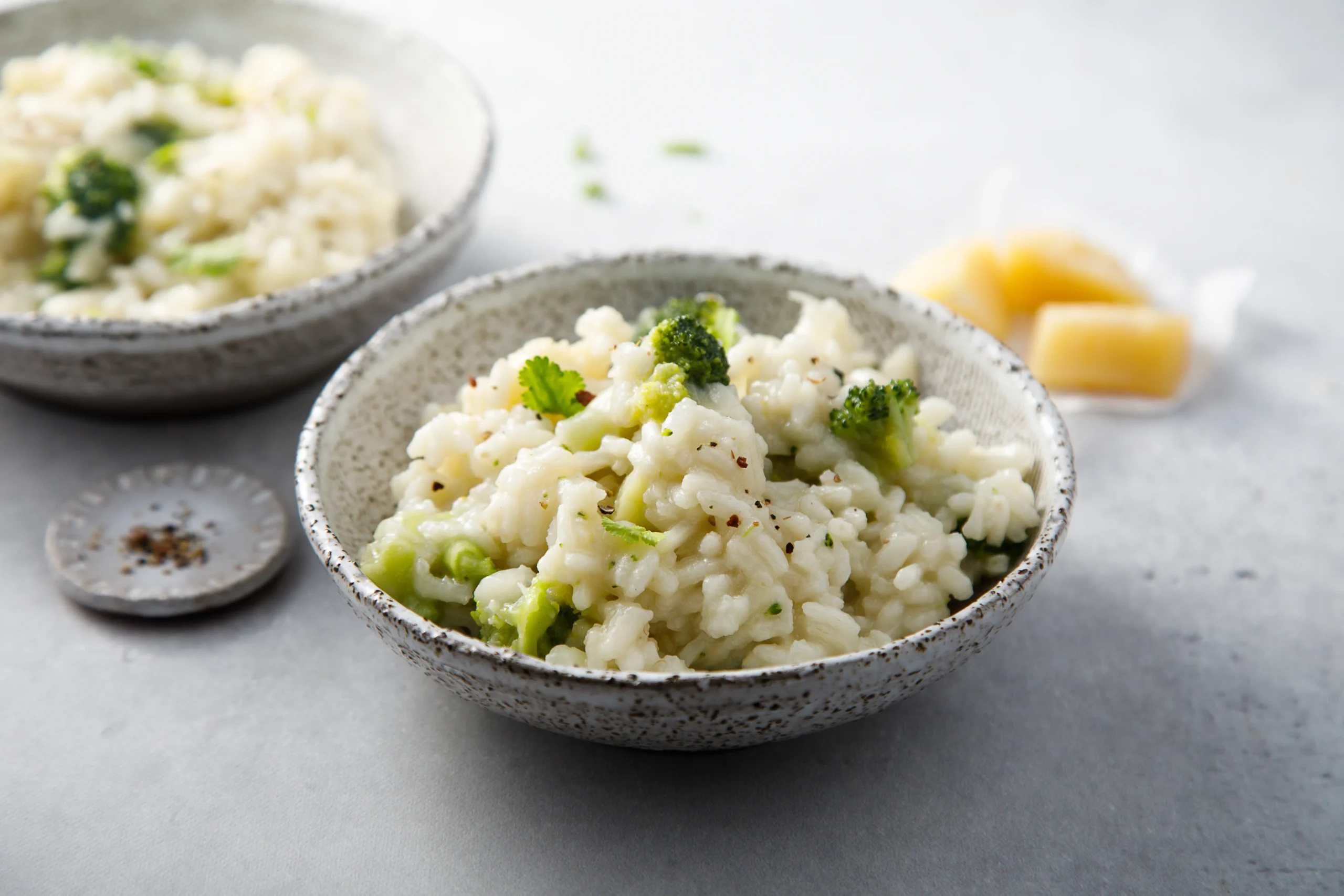
Ingredients:
- 2 tablespoons olive oil
- 3 tablespoons butter
- ½ large sweet onion, finely chopped
- 4 cloves garlic, chopped
- 1 ½ cups Arborio rice
- ½ cup dry white wine (such as Sauvignon Blanc)
- 2 tablespoons lemon juice
- 5 cups hot chicken broth
- 1 cup heavy cream
- 3 cups cooked broccoli florets
- 2 tablespoons chopped fresh chives
- 1 tablespoon grated Parmesan cheese
- 1 ½ tablespoons grated Asiago cheese
- salt and pepper to taste
Instructions:
- Gather all ingredients.
- Heat olive oil and butter in a large, heavy-bottomed saucepan over medium-high heat. Add onion and garlic; cook and stir until onion begins to turn golden brown at the edges, about 2 minutes.
- Pour in rice, and stir until rice is coated in oil and has started to toast, 3 to 4 minutes.
- Reduce heat to medium and stir in white wine and lemon juice. Cook and stir until wine has mostly evaporated, then stir in 1/3 of the chicken broth; continue stirring until incorporated.
- Repeat this process twice more, stirring constantly. Stirring in broth should take 15 to 20 minutes in all. Stir in cream and cook 5 minutes before stirring in broccoli, chives, Parmesan cheese, and Asiago cheese. Cook and stir until risotto is hot; season to taste with salt and pepper before serving.
Sources
- https://www.allrecipes.com/recipe/166138/broccoli-risotto-with-cream-and-lemon/
- https://jfootankleres.biomedcentral.com/articles/10.1186/s13047-021-00480-w,
- https://www.ncbi.nlm.nih.gov/pmc/articles/PMC6602402/,
- https://www.ncbi.nlm.nih.gov/pmc/articles/PMC3103112/,
- https://www.jospt.org/doi/full/10.2519/jospt.2018.7426