


The Ins and Outs of a Good Fall Prevention Plan
Have you noticed that you aren’t quite as steady on your feet as you used to be? Do you find yourself avoiding your favorite activities or sticking close to home because you’re worried you might fall? You don’t have to live in fear: Ellis Physical Therapy offers dedicated fall prevention services to help restore both balance and confidence!
If you’re an older adult, it’s understandable that you might be concerned about falling. Falls are a significant source of injury and hospitalization among seniors. Furthermore, the fear of falling can profoundly impact your quality of life, as many people will avoid physical activity out of a misguided attempt to prevent falling. Fortunately, the team at Ellis Physical Therapy has plenty of experience helping our older patients with fall prevention.
We can help you identify and address your specific fall risks, improve your balance and stability, and find ways to get you moving with confidence again. Don’t let fear of falling keep you from enjoying your golden years. Call us to schedule an appointment today!


Our Patients Get Great Results
“Staying healthy, happy, and maintaining your active lifestyle takes proactive care. Jay has never failed me! Recently I had a knee injury that the ortho doctor said was just age and wasn’t much that could be done. I met with Jay and he identified the issue and how to fix it and he gave me an excellent plan to address the pain. I hiked 10 miles today with no pain!! I highly recommend him.”
– T.B.

What Does Balance Training Look Like?
Balance training consists of targeted exercises that challenge–and thus improve–your overall balance and stability. Our physical therapists arrange these exercises progressively, which allows you to start where you feel most comfortable. Over time, you’ll be able to perform more and more challenging balance exercises.
Below are some sample balance exercise progressions to give you an idea of what to expect. But to ensure you’re performing the right exercises for your ability level, schedule an appointment at Ellis Physical Therapy!
Balance Exercise Progressions
One-Legged Stands
- Beginner: Stand facing the fall, your arms outstretched, fingers lightly touching the wall. Lift one leg and keep a slight bend in the standing leg. Hold for 5-10 seconds.
- Intermediate: Perform the same motion as above–but don’t touch the wall for support.
- Advanced: Perform the same motion as the intermediate progression–but keep your eyes closed. It’s harder than it sounds!
Tandem Stance
- Beginner: Stand with your feet heel-to-toe, as if standing on a tightrope.
- Intermediate: Stand in the same stance as above, but do it on a pillow (which adds instability). You can also try closing your eyes.
- Advanced: Walk heel-to-toe without using any support. Try to go 10-20 feet before taking a rest.
Understanding Your Fall Risk
It’s important that every older adult understand their fall risk. Everyone’s risk is different; falls are complex, and multiple factors can contribute to a high risk of falling. The more risk factors you have, the more likely you are to suffer a fall.
Which of these factors apply to you?
- You have impaired vision.
- You’re 65 years or older.
- You’ve fallen before.
- You’re sedentary.
- You have certain medical conditions, such as arthritis, diabetes, or vascular disease.
- You’ve suffered a stroke.
- You have impaired mobility.
What’s Involved in a Fall Prevention Plan?
At Ellis Physical Therapy, our physical therapists will conduct a comprehensive evaluation, and Getting active is one of the best things you can do to reduce your risk of falling. This is why the fear of falling can be so insidious, as it prevents people from engaging in the physical activity that can protect them from falls.
For that reason, a good fall prevention plan is actually a plan to help you get more active. We’ll work with you to identify the areas holding you back from a physically active lifestyle–whether that’s pain, instability, or something else–and address them.
Because we customize every fall prevention plan to suit the patient’s needs, no two plans are alike. However, we’ll generally pull from the following techniques:
- Exercise Program: Once you’ve worked through our fall prevention plan, we’ll help you develop an exercise program, such as Tai Chi or a walking regime, to get you moving when you’re not in the clinic.
- Pain Management: If persistent or chronic pain is holding you back, we can help address pain through manual therapy, gentle exercise, or pain-relieving modalities.
- Balance Training: The cornerstone of any fall prevention plan, balance training consists of specialized exercises that challenge your balance. We’ll increase the difficulty as you improve, ensuring you see results.
- Strength Training: Weak muscles, especially core muscles, are a significant source of instability. We’ll show you appropriate strength training exercises that will help improve your balance while standing and walking–and make it easier for you to recover from a momentary loss in balance.
- Gait Training: Your gait refers to your walking pattern, and you’re more likely to fall if it’s impaired. We’ll help correct gait issues so you can walk with confidence.

What To Expect During Your Sessions
Your initial appointment will consist of an in-depth physical evaluation that includes the following:
- A complete health history
- Examination of your particular fall risk factors
- Movement screens to evaluate gait, mobility, strength, and balance
- Discussion of your specific goals
This information helps us create the best fall prevention plan for your needs, which we’ll guide you through during subsequent appointments. We provide a space where you can exercise without fear of injury. We also always meet you at your current ability level–although we will help you improve by gradually increasing the difficulty of your exercises!
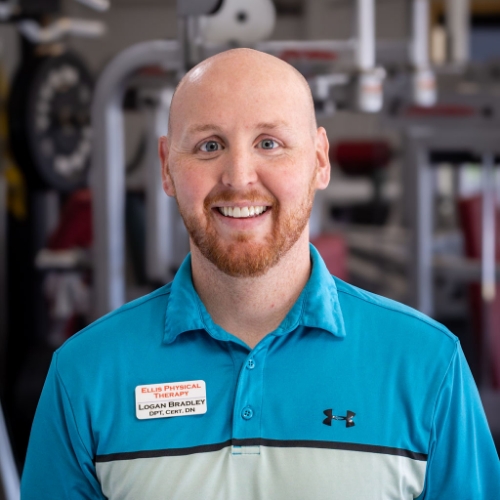
Meet Logan Bradley
Logan Bradley, PT, DPT, grew up in Rigby, Idaho and finished his undergraduate studies at BYU-Idaho in Rexburg with a Bachelor’s Degree in Exercise Physiology. He then completed his Doctor of Physical Therapy degree at Touro University Nevada in Las Vegas.
Logan places a special emphasis on orthopedic manual therapy. Interaction with therapy patients is especially rewarding for him. He has a particular interest in athletics and loves teaching proper strengthening techniques to prevent sports injuries.
In his free time, Logan enjoys watching and playing sports. He loves snowboarding, playing guitar, and spending time with his family. He and his wife Melissa also love hiking, exercising and all kinds of outdoor activities. Logan and his wife have adopted two boys (Anthony and Jaxon) and loves spending time with them.
Find Your Balance Today!
Don’t let a fear of falling keep you from your favorite activities. The Ellis therapists will help you get back on your feet–and stay there. Call today to get started with an initial fall risk assessment.

Sausage Gnocchi Soup
Ingredients:
- 1 tablespoon olive oil
- 1 lb. ground sausage
- ½ cup dry white wine
- 3 tablespoons butter
- 1 yellow onion, diced
- ¾ cup carrots, diced
- 2 ribs celery, diced
- 3 cloves garlic, minced
- 1 teaspoon soy sauce
- 1 teaspoon hot sauce
- 1/3 cup flour
- 5 cups chicken broth
- 1 cup heavy cream
- 16 oz. potato gnocchi, in pasta aisle
- 1/3 cup Parmesan cheese, grated
- 3 cups packed baby spinach
Directions:
- Heat olive oil in a large soup pot over medium heat. Add the sausage and cook and crumble to break it apart. Stir occasionally until cooked through, 7-10 minutes. Remove and set aside.
-
Add the wine and set the heat to medium. Use a silicone spatula to “clean” the brown bits from the bottom/sides of the pot, this will add more flavor to the soup. Bubble gently and reduce by half, about 4 minutes.
-
Add the butter, onions, celery, carrots, and garlic. Cook until softened, about 5-6 minutes. Add the soy sauce, hot sauce, and seasonings and cook for 2 minutes.
-
Stir in the flour and cook for 1-2 minutes.
-
Add the chicken broth in small splashes, stirring continuously. Add the heavy cream in the same manner. Bring to a boil, then reduce to a simmer.
-
Add the sausage back along with the gnocchi and simmer for about 5 minutes, refer to package instructions for exact cooking time.
-
Reduce heat to low and sprinkle in the Parmesan cheese, stirring continuously. Add the spinach and cook until wilted, about 3-4 minutes. Remove from heat and serve!