



How Physical Therapy Can Combat Carpal Tunnel Syndrome
Candace was a hairstylist who loved her work. Every day, she looked forward to chatting with her customers as she helped them look their best. After ten years in the business, she had built up an impressive roster of clients–but she’d also developed some worrying symptoms, too.
It started with a “pins and needles” sensation in her hands and fingers, especially at night. However, as time passed, she began to experience the sensation at work. Between appointments, Candace frequently found herself shaking out her hands, trying to alleviate her discomfort.
Eventually, that tingling sensation became more pronounced, and it was often accompanied by pain throughout her hand. Candace started to find once-simple motions–like snipping off dead ends or giving a vigorous shampoo–much more difficult.
That was when Candace visited the team at Ellis Physical Therapy. We reviewed her symptoms, examined her hand and wrist, and gave her the diagnosis: carpal tunnel syndrome. We also provided a wealth of non-surgical treatments to help Candace manage her condition so she could go back to making her clients feel beautiful.
Are you experiencing similar symptoms? Have you recently received a carpal tunnel syndrome diagnosis? Our team can help you, too. Call us today to learn more!


Our Patients Get Great Results
“This is the fourth surgery that I have to get physical therapy for. It’s been several years since the last time. The faces have changed, Jay Ellis has retired (feeling old now) but the receptionist is still the same. I still get the same professional care and personal treatment. I don’t get that run-through-the-mill feeling I’ve had from other places in the past. They talk to you and with you. In other places, I rarely get that. Jay had a special therapy pool and water treadmill put in which my husband says made a big difference. I guess it shows in the fact that it’s my fourth time coming here. I like the treatment you get.”
– V.C.
What Exactly Is Carpal Tunnel Syndrome?
Because carpal tunnel syndrome is relatively common, most of us have a vague idea of what it entails: mainly that it involves the hands, fingers, and wrists and that it’s associated with certain jobs (like computer work).
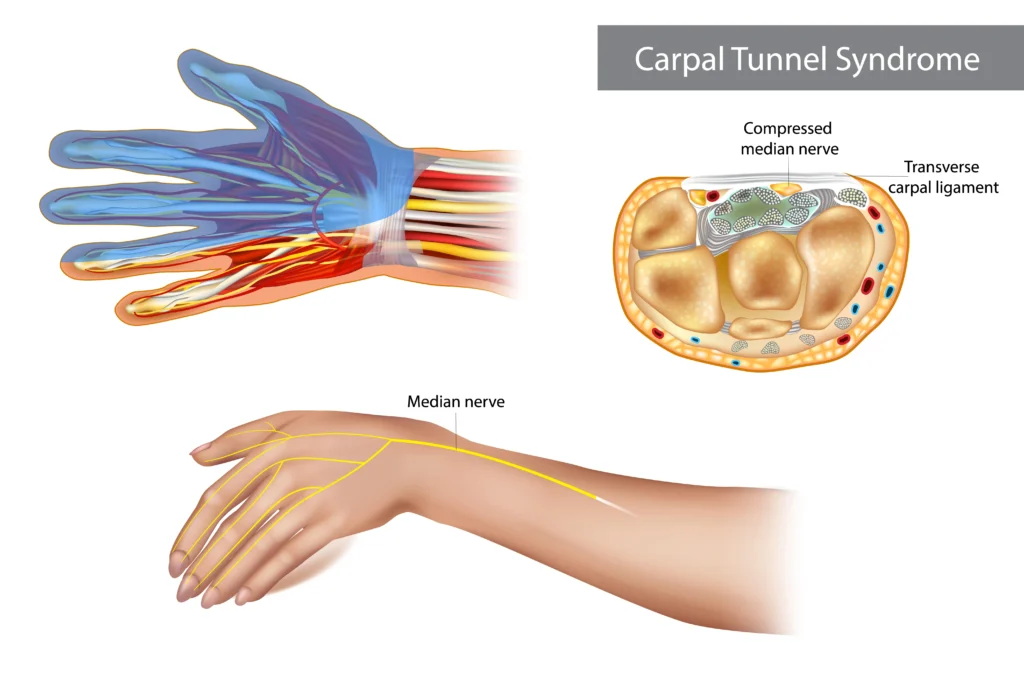
These two things are true but don’t provide the complete picture. Carpal tunnel syndrome gets its name from the carpal tunnel, a structure of bones, ligaments, and tendons that runs from your wrist into your hands. It serves as a passageway for the median nerve, one of the major nerves in your upper extremities.
Carpal tunnel syndrome occurs when the median nerve becomes trapped in the carpal tunnel, leading to the many symptoms we associate with the condition:
- Weakened grip
- Pain or numbness in the hand
- Numbness, burning, or tingling in your fingers
- Swelling in your fingers
- Pain or numbness that increases at night
These symptoms usually develop gradually. At first, you may only experience them at night. But if you leave the condition untreated, you’ll begin experiencing symptoms during the day, especially after small hand movements (as Candace experienced).
Treating Carpal Tunnel Syndrome with Physical Therapy
If your carpal tunnel syndrome is still in the early stages, we’ve got good news: physical therapy alone may be enough to manage your symptoms! Experts recommend addressing carpal tunnel syndrome with conservative methods before opting for surgery–an approach that can save you money in the long run.
Here’s what we’ll do:
- Offer drug-free pain management: We can show you different options for managing hand pain, such as hot or cold therapy.
- Develop strategies to manage your symptoms: Many people develop carpal tunnel syndrome due to repetitive hand motions, often at their job. Adjusting your posture, using proper equipment, and taking frequent breaks during the day can all help slow the condition’s progression.
- Prescribe therapeutic exercises: Targeted finger and hand stretching exercises can help improve mobility, while strengthening exercises can help decrease symptoms.
- Provide a night splint: Splinting immobilizes your wrist at night, reducing discomfort so you can get a full night’s sleep.
Often, these techniques are enough to minimize symptoms so that you don’t need to bother with surgery at all. Unfortunately, sometimes surgery is necessary to fully manage carpal tunnel syndrome, especially if you didn’t start treatment early enough.
The good news is carpal tunnel release surgery is a relatively minor outpatient surgery. However, it will still require rehabilitation afterward, and our team can guide you through the process. We’ll help reduce scar tissue and restore strength to your wrist so you can enjoy the benefits of your procedure.
Call Us Today To Learn More
Carpal tunnel syndrome may be common, but it’s not something you have to live with. The team of physical therapists at Ellis Physical Therapy will work with you to find a treatment plan that suits your needs, including helping you manage work tasks that might worsen your symptoms.
Ready to get started? Call to schedule your consultation today!
Exercise of the Month: Ankle Alphabets
Start by sitting up straight in a chair. Raise one leg out in front of you. Slowly write the letters of the alphabet with your foot, only moving at your ankle joint.
3 Sets, 10 Reps. (Materials needed: chair)

Recipe of the Month: Immunity Soup

Ingredients:
- 1 tablespoon extra virgin olive oil
- 1 medium onion, quartered and thinly sliced
- 3 celery stalks, thinly sliced
- 1 medium carrot, thinly sliced
- 8 medium garlic cloves, very thinly sliced
- 2 tablespoons grated ginger, peeled
- 3/4 teaspoon finely ground white pepper, plus more to taste
- 1 1/2 cups mushrooms, trimmed
- 8 ounces firm tofu, sliced into thin slabs
- 2 1/2 teaspoons fine grain sea salt
- to serve: lots of chopped green onions, sliced watermelon radish, and/or pea shoots
Instructions:
- Heat the oil in a large soup pot over medium heat, and stir in the onion, celery, carrot, garlic, and ginger. Gently sauté just until soft, you don’t want any browning. Add a small splash of water if the pan dries out in the process.
- Stir in the white pepper and 10 cups of water. Dial up the heat to bring the broth to a simmer, and hold there for about 15 minutes. Add the mushrooms, tofu, and salt, and gently simmer for another 5 minutes. Stir well, taste, and adjust with more salt or water if needed.
- Ladle the soup into shallow soup bowls and top with lots of green onions, pea shoots, and a few watermelon radish slices. Add a finishing drizzle of olive oil, and enjoy!
Is It Really Carpal Tunnel Syndrome?
Carpal tunnel syndrome is relatively common, affecting up to 5% of the population. For that reason, many people will immediately assume any hand or wrist discomfort is carpal tunnel syndrome–but that’s not necessarily the case.
At Ellis Physical Therapy, we can help you know for certain if you’re struggling with carpal tunnel syndrome or another condition. Below are some other sources of hand and wrist pain that may be causing you trouble.
A good rule of thumb is to remember that carpal tunnel syndrome is a nerve disorder–which means its symptoms include numbness and tingling. If you’re just struggling with pain or immobility, something else is probably the culprit.
If It’s Not Carpal Tunnel Syndrome, It Could Be…
Hand arthritis.
Arthritis can affect any joint, including the wrist and hands. Because it’s a joint issue, it won’t cause any numbness or tingling. That said, rheumatoid arthritis is a risk factor for developing carpal tunnel syndrome, so if you have RA and do start to experience nerve-related symptoms, give us a call.
Wrist tendonitis.
This condition develops when the tendons in your wrist become damaged or inflamed, leading to pain and stiffness (but no numbness or tingling). People often mistake it for carpal tunnel syndrome because it can be an overuse injury, developing out of repetitive small hand motions.
Cervical radiculopathy.
This condition does involve your nerves, which means it can cause symptoms very similar to carpal tunnel syndrome, including numbness in your hands and a weakened grip. However, it stems from an issue in your neck, so you’ll notice pain running down your arm or when you turn your head.
We Can Help You!
If you’re experiencing any symptoms in your hands or wrists, it’s essential to seek help from a physical therapist. We can help you understand what’s going on–and help you find an appropriate treatment option!
Sources
- https://www.101cookbooks.com/immunity-soup
- https://www.ncbi.nlm.nih.gov/books/NBK448179/
- https://www.sciencedirect.com/science/article/abs/pii/S0003999321003257
- https://www.choosept.com/guide/physical-therapy-guide-carpal-tunnel-syndrome
- https://www.arthritis.org/diseases/more-about/arthritis-vs-carpal-tunnel
- https://www.physio-pedia.com/Tendinopathy
- https://orthoinfo.aaos.org/en/diseases–conditions/cervical-radiculopathy-pinched-nerve/